When Replacement Makes More Sense
Cracks, distortion, weeping steel seams or failing supports are reasons for a prompt assessment. A tank does not become suitable simply because it still holds oil today. Its condition, position and support need to be considered together, particularly before another delivery adds weight.
Cleaning can address water and sediment, but it cannot restore a structurally damaged vessel. Moving an ageing tank also risks paying for work that will soon need repeating. If the main problem is dirty fuel in an otherwise sound tank, compare tank cleaning before choosing replacement.
A planned replacement gives you time to consider capacity and delivery access. A suspected leak needs a different priority: protect people and the environment, arrange professional assessment and avoid adding fuel. Use our leaking tank guidance if oil may already be escaping.
Choose for Use, Shape and Access
Tank capacity should reflect actual consumption and practical delivery arrangements. Tell us about your normal oil orders, whether the property is occupied throughout winter and any planned extension or change of use. A seasonal cottage and a continuously occupied farmhouse can have very different storage needs.
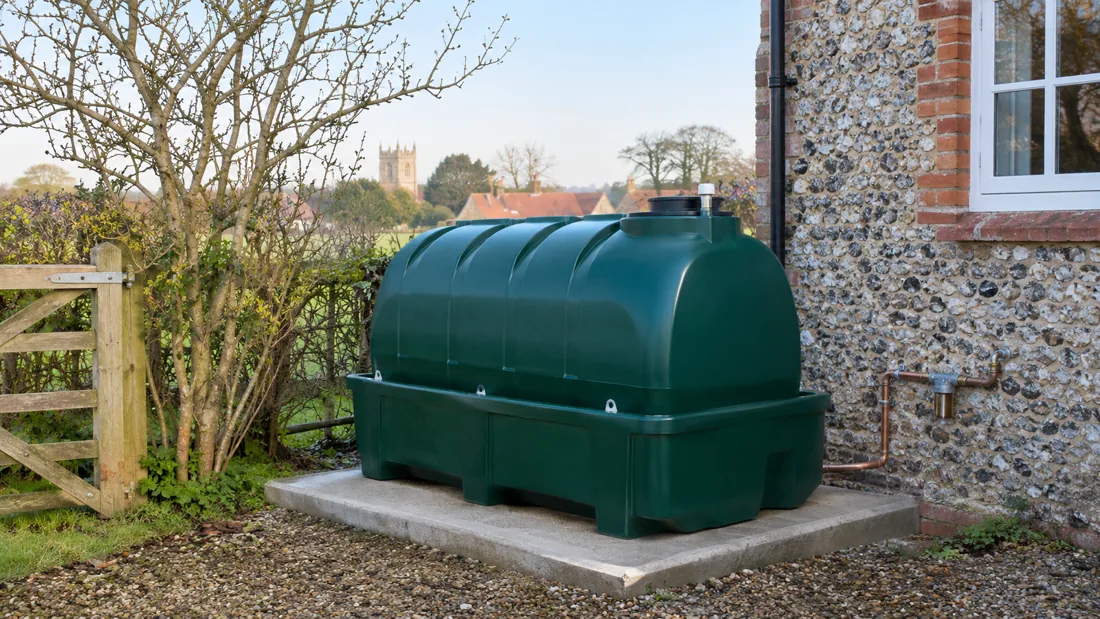
Horizontal, vertical and slimline designs use space differently. Compare the full external dimensions of a bunded model, including the outer containment, rather than its nominal fuel capacity. Room is also needed for installation, inspections, filling and future maintenance.
Plastic and steel have different inspection and maintenance considerations. Ask why the proposed material and containment arrangement suit the position. A bund is an outer containment space intended to retain a leak, and its condition and fittings matter as much as the inner tank.
Do Not Assume the Old Position Still Works
A replacement survey should look beyond the old footprint. New windows, an extension, changed boundaries or nearby drains may affect the assessment. The installer needs to check the proposed location against the applicable fire and pollution requirements, manufacturer instructions and the building context.
An existing base may be usable, but only if its condition, dimensions and support are suitable for the new model. Cracked slabs, settlement and unstable pillars need attention. New concrete or other base work may change the sequence because the supporting structure has to be ready before the filled tank goes into service.
For England, Approved Document J provides guidance on fuel storage installations. Confirm the Building Regulations compliance route with the installer before booking. An existing tank position is not proof that a replacement in exactly the same spot is suitable.
Keep Usable Fuel and Plan the Heating Break
Remaining fuel needs temporary storage, direct transfer or collection. The choice depends on its condition and the working sequence. Water and sludge should not be transferred into the replacement merely to save the apparent fuel volume, so the quote should explain how contents are assessed.
Heating will be interrupted while the storage connection is changed. Explain if anyone depends on continuous warmth, if hot water also relies on oil, or if the property is a holiday let with guests arriving. A temporary supply may be worth considering for a longer programme, with siting, hire and connection costs agreed beforehand.
Do not run a damaged tank down deliberately or arrange a fresh delivery to suit an assumed installation date. Agree a fuel plan first. Let the contractor know about automatic deliveries and any remote fill point, and confirm who is responsible for telling the oil supplier.
Photographs That Make the Quote Useful
Send a view of the whole tank, label, base, fill point and visible oil line. Show nearby walls, doors, windows and boundaries in wider photographs. Include any ditch, drain, pond, well or borehole you know about, even if it is outside the immediate tank area.
The new tank has to get in before it can do its job. Give gate widths, describe steps or slopes, and photograph corners from both directions. Mention narrow Norfolk lanes, weight-sensitive drives and ground that becomes soft in wet weather so access can be assessed without relying on a dry-day photograph.
For a business, identify the system served, permitted outage window and any separate fuel stocks. Where a farmhouse and working yard share a site, explain which tank supplies which use. Do not assume the same storage requirements apply to every tank on the property.
What the Quote and Handover Should Cover
A replacement price should describe the new tank, support works, fuel handling, removal of the old vessel and connection work. Additional pipe runs, protected siting, awkward handling, temporary heating arrangements and waste volumes can all affect cost. Ask what would trigger a variation after work starts.
At handover, request the tank model and warranty information, installation and commissioning record, care instructions and the applicable compliance documentation. Keep separate disposal records for the old tank and recovered waste. Ask for an explanation of the gauge and filling arrangement before the installation is treated as complete.
Questions About This Service
Will the old oil be transferred to the new tank?
Old heating oil can sometimes be transferred after its condition has been checked. Water, sediment or other contamination may mean some contents need removal instead. Include the estimated quantity in your enquiry and ask the quote to distinguish usable fuel transfer from waste collection and any temporary storage needed.
Can a replacement tank stay in the same place?
A replacement tank can stay in the same place only if the position and base suit the proposed installation. Nearby building changes, drainage risks and the new model’s footprint all matter. The installer should assess these before confirming the position, rather than treating the old tank as evidence of suitability.