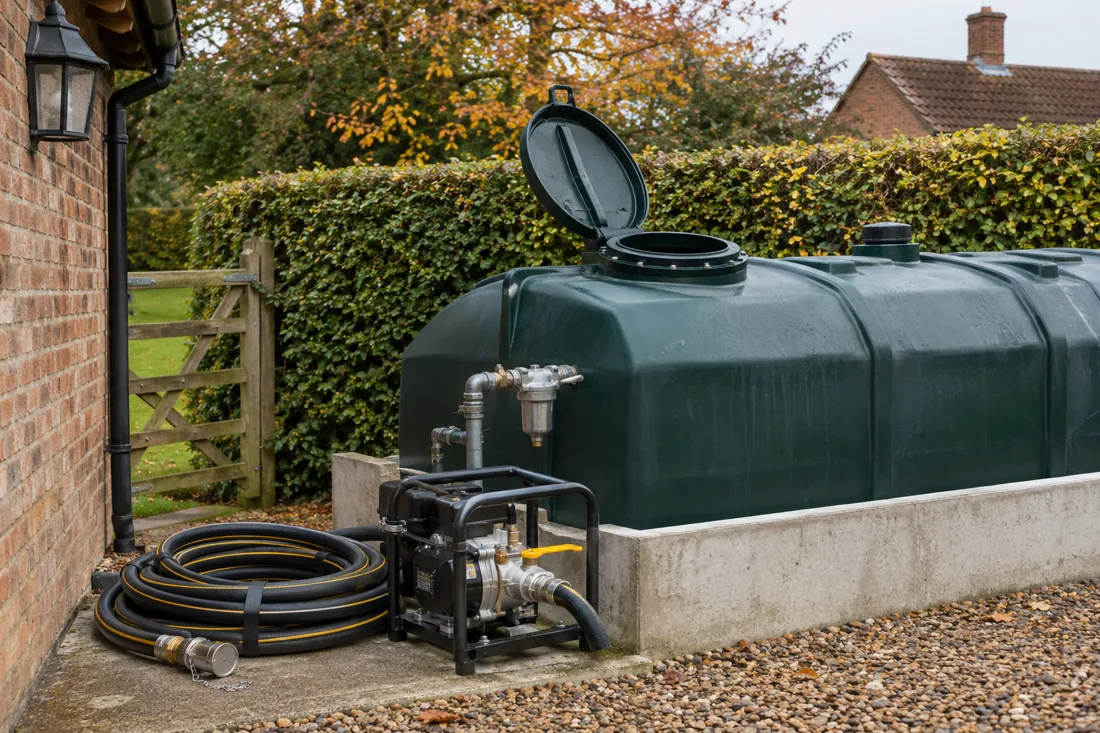
Cleaning, Water Removal or a Boiler Visit?
A boiler cutting out does not prove the tank needs cleaning. Filters, the supply line and the appliance can cause similar symptoms. Tell us what has happened, how often it happens and what your heating engineer has already checked, so tank work starts with evidence rather than a guess.
Water, sediment and sludge can collect beneath otherwise usable oil. A condition check helps distinguish a small water problem from wider contamination. Depending on the findings and tank design, targeted water removal may be possible, while accumulated deposits can justify a fuller clean.
Cleaning is unsuitable as a remedy for structural failure. A split plastic tank, unstable base or badly corroded vessel needs an assessment of its integrity first. If your main concern is distortion or leakage, look at replacement or leak guidance before booking a routine clean.
What Happens to the Fuel During Cleaning?
The useful oil and the unwanted material should not be treated as one undifferentiated volume. Assessment may include checking for water and examining a sample, with a plan for temporary storage. Fuel that can be retained may be filtered before return, subject to its condition and the agreed method.
Filtration does not make every contaminated fuel suitable for use. Tell us about accidental mixing, an unusual delivery or known wrong fuel, as these may require a different approach. Do not add treatment chemicals before the contractor has understood the problem.
The amount left affects storage, pumping and the quantity of waste removed. Provide a gauge estimate and recent delivery information, but do not run the tank dry to help the job. A planned fuel level is useful only when the tank and heating system can remain safe.
A Clean With a Defined End Point
After assessment, the contractor agrees isolation, fuel transfer and a cleaning method suited to the vessel. Suction equipment can remove settled liquids and loose material. Further cleaning depends on the internal access, tank condition and what deposits are present.
Not every plastic tank can be cleaned in the same way as a large steel vessel. Restricted inspection openings, internal shapes and older fittings affect what equipment can reach. Ask what can be inspected after cleaning, and where the design limits visibility.
Tank entry should be avoided where the work can be completed externally. HSE confined-space guidance explains the risks and controls needed where entry is unavoidable. Never enter a tank yourself, open a new access hole or try household cleaning equipment inside it.
Stop the Same Problem Returning
Removing water without investigating its entry route can leave the underlying fault in place. The assessment should consider caps, seals, vents, the tank body and any evidence of flooding. In a bunded installation, water in the outer containment is a separate issue from water in the stored fuel.
For a seasonal Norfolk property, give the date it was last occupied and explain who inspects the storage during empty periods. A tank that receives little attention between visits can develop a problem without anyone noticing a change in heating performance.
Cleaning frequency should follow condition and inspection findings rather than a blanket calendar package. Ask for practical advice on the installation you have. Keep records of repeated filter blockage or water findings so the next engineer can see whether a pattern is developing.
Access and Preparation for the Visit
Send pictures of the tank, visible fittings and the working area around it. Include the approximate capacity, construction material, current fuel level and known symptoms. If an engineer has removed a blocked filter, share their findings or report rather than trying to collect a fuel sample yourself.
Show the hose route from a sensible parking position to the tank. Gates, steps, steep ground and fragile surfaces can change the equipment plan. Mention whether the tank is in a building, below ground or behind structures that restrict access to inspection openings.
Heating is unavailable while the storage is isolated unless a separate arrangement has been designed. Tell us about occupied lets, vulnerable occupants or business processes that depend on the supply. Agree the interruption and access arrangements before selecting a date, especially during cold weather.
Compare Cleaning Quotes and Keep the Findings
Costs depend on fuel volume, contamination, tank geometry, access and the waste route. Holding usable oil temporarily adds a different requirement from taking all contents away. A quote should say whether it includes sampling, filtration, cleaning, refilling and checks of the supply after reconnection.
Ask what happens if the tank proves unsafe to clean or inspection reveals damage. A sensible scope explains when work would pause for a new decision. Fresh fuel, replacement fittings or repairs to the boiler should not be assumed to be included in the cleaning price.
Request a record of the work completed and any defects or limitations observed. Waste records should match the classified liquids and solids removed and the disposal route used. Keep these with heating service documents, together with any advice about further inspection or replacing a defective seal.
Questions About This Service
Does tank cleaning fix repeated boiler breakdowns?
Tank cleaning can help where water or sediment is contaminating the fuel supply, but repeated boiler breakdowns can have other causes. Share the heating engineer’s diagnosis and the filter history before booking. A check of the contents should establish whether cleaning is justified and what other faults still need attention.
Can all the oil go back after cleaning?
Oil returned after cleaning must be suitable for the system. The condition check and separation process determine what can be retained, while contaminated residues need appropriate disposal. Ask how usable fuel will be held and filtered, and whether you will need to arrange a fresh delivery after the work.